February 2026 
President's Message
Connection, Inclusion, and the Coaching Work That Sustains Black Leadership
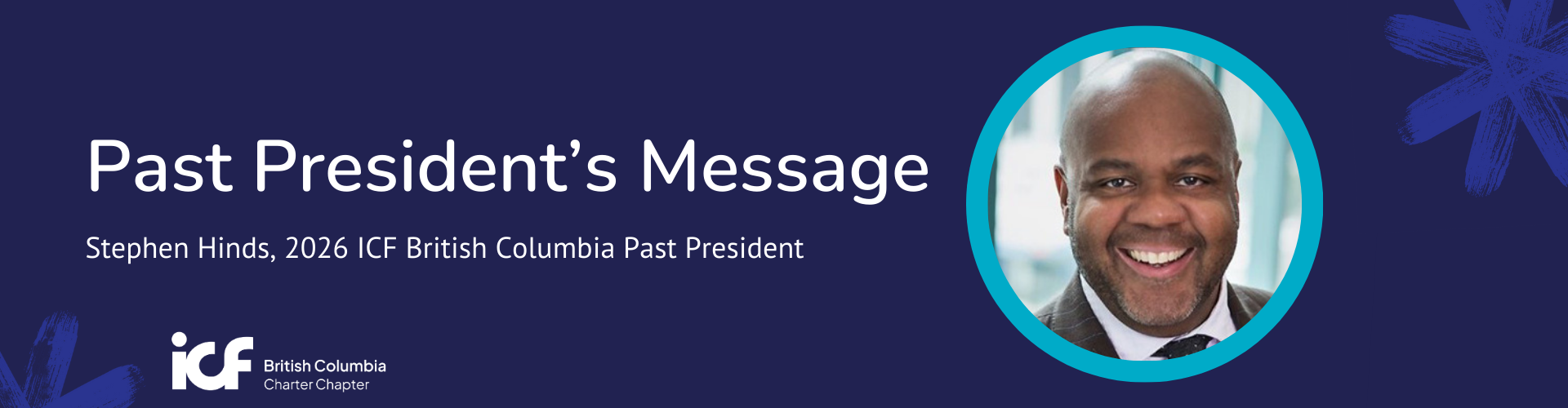
Black History Month invites reflection, but it also invites responsibility, especially for those of us who coach and support leaders. As a Black coach who also works with Black leaders, I am continually reminded that leadership development is inseparable from connection, inclusion and belonging. They are not “soft” considerations but foundational conditions for sustainable leadership.
From my experience, many Black leaders are highly visible yet not always feeling fully included in their organizations. Over time, this can show up as isolation at senior levels, pressure to self-monitor, code-switch or the sense that your own leadership capabilities must constantly be proven. These dynamics are rarely named explicitly in organizations, but they are felt deeply by the leaders living them.
As coaches, inclusion begins with relationship. It shows up in the quality of presence we bring, the assumptions we suspend, and the extent to which we create space for leaders to bring their full self into the conversation. For Black leaders, coaching is often one of the few places where they do not need to translate their experience or minimize its impact. To my coachees, that matters.
I see the importance of this connection clearly through the Black President’s Collective which is an ICF Member Resource Group through our DEIB team. What started as three incoming Black Presidents from LA, San Diego and British Columbia who joined together to create community for first time presidents has grown to be a global forum of nearly 20 Black Presidents from all over the ICF ecosystem around the globe. What resonates most for me about this group is how we as a collective rejected the idea that leadership at the highest levels must be isolating. Through my involvement, I learned that peer connection, shared reflection, and collective wisdom are not optional add-ons; they are a leadership must. When leaders are connected to one another, they are better equipped to lead systems with clarity, courage, and care. Huge thank you to Ana and Tiffany for being a big part of my ICF journey of inclusion and belonging!
From a coaching lens, our work is deeply aligned with ICF core competencies while cultivating trust, inclusion, belonging and safety. Maintaining presence, listening to what is said and what is not being said. Coaching Black leaders requires us as coaches to pay special attention to power, identity, and context, while remaining grounded in curiosity rather than assumptions. Inclusion, in this sense, is not a stance we declare but is a practice we embody.
As coaches and leaders, Black History Month offers an opportunity to reflect on the systems we support and the conditions we help create. Are our coaching spaces places of genuine belonging? Do our leadership practices strengthen connection, or inadvertently reinforce isolation?
When connection is restored, leaders don’t just perform better, they lead more humanely. And that, ultimately, is the kind of leadership our organizations and communities need.
Stephen Hinds, PCC
Past President ICF BC
Join Our New Working Group: Exploring Coaching as an Organizational Benefit
We're launching a short-term working group to explore integrating coaching into our organizational benefits program. As coaching grows as a leadership development and wellbeing tool, we want to understand how it could support our people and culture goals.
We're seeking volunteers with HR or Benefits backgrounds who are curious, collaborative, and interested in shaping recommendations to make coaching more accessible.
What to expect:
- 3–4 focused meetings in 2026
- Research best practices and gather insights
- Meaningful input on a proposal for senior leadership
Interested? Contact Stephen Hinds ([email protected]) by March 30, 2026. Meetings and work together begins April 2026.
Let's build something impactful together!
Spotlight Event
PoCo Bowl Social
March 17, 2026
5:15 PM PST - 8:00 PM PST
PoCo Bowl
2263 McAllister Ave
Join the ICF BC community for an evening that starts with 5-pin bowling at PoCo Bowl and wraps up with gelato and a facilitated conversation at Matteo’s Gelato. These two locally owned businesses are neighbours, making it easy for us to move from play to conversation together.
PoCo Bowl: Fun Bowl + Pizza
We’ll kick things off with 5-pin bowling (the classic Canadian game with the small balls!) in a “Fun Bowl” format designed for maximum engagement, mixing, rotating, and interacting so you’re connecting with everyone, not just the people you arrive with.
Matteo’s Gelato: Mini Gelato + Facilitated Conversation
After bowling, we’ll take the short walk next door to Matteo’s Gelato. Each guest will receive a mini gelato, and we’ll shift into a facilitated community conversation led by two Essential Impact faculty.
Together we’ll explore how connection and play show up in the work we do and the value we’ve seen created repeatedly when leaders bring these two values into their teams, cultures, and conversations.

Calendar of Events
Coaches & Coffee Meet-Up:
Kelowna
February 17, 2026
4:30 PM PST - 6:30 PM PST
Moxies Restaurant

Coaches & Coffee Meet-Up:
Richmond, BC
February 25, 2026
5:00 PM PST - 7:00 PM PST
Waves Coffee – London Plaza
Chapter News
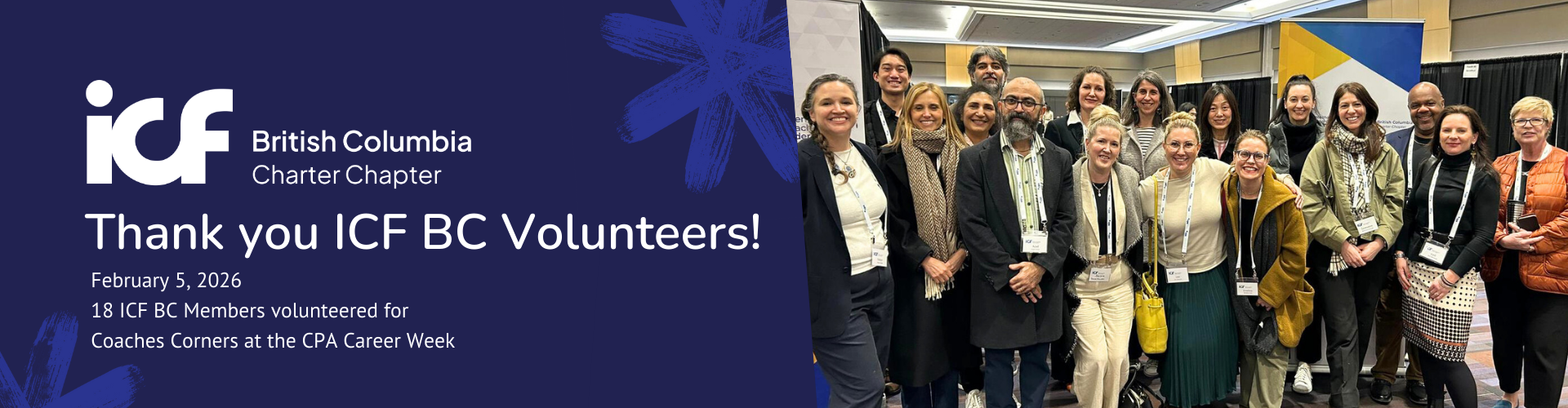
It was an incredible day for coaching at CPA BC's Career Week! Witnessing our community of coaches show up with such dedication, professionalism, and heart was beautifully moving. ❤️
18 ICF BC coach volunteers delivered 55 Coaching Corner sessions (25 minutes each) to CPA students and community members, every available spot fully booked. This remarkable turnout demonstrates the power of coaching and the hunger for this kind of support.
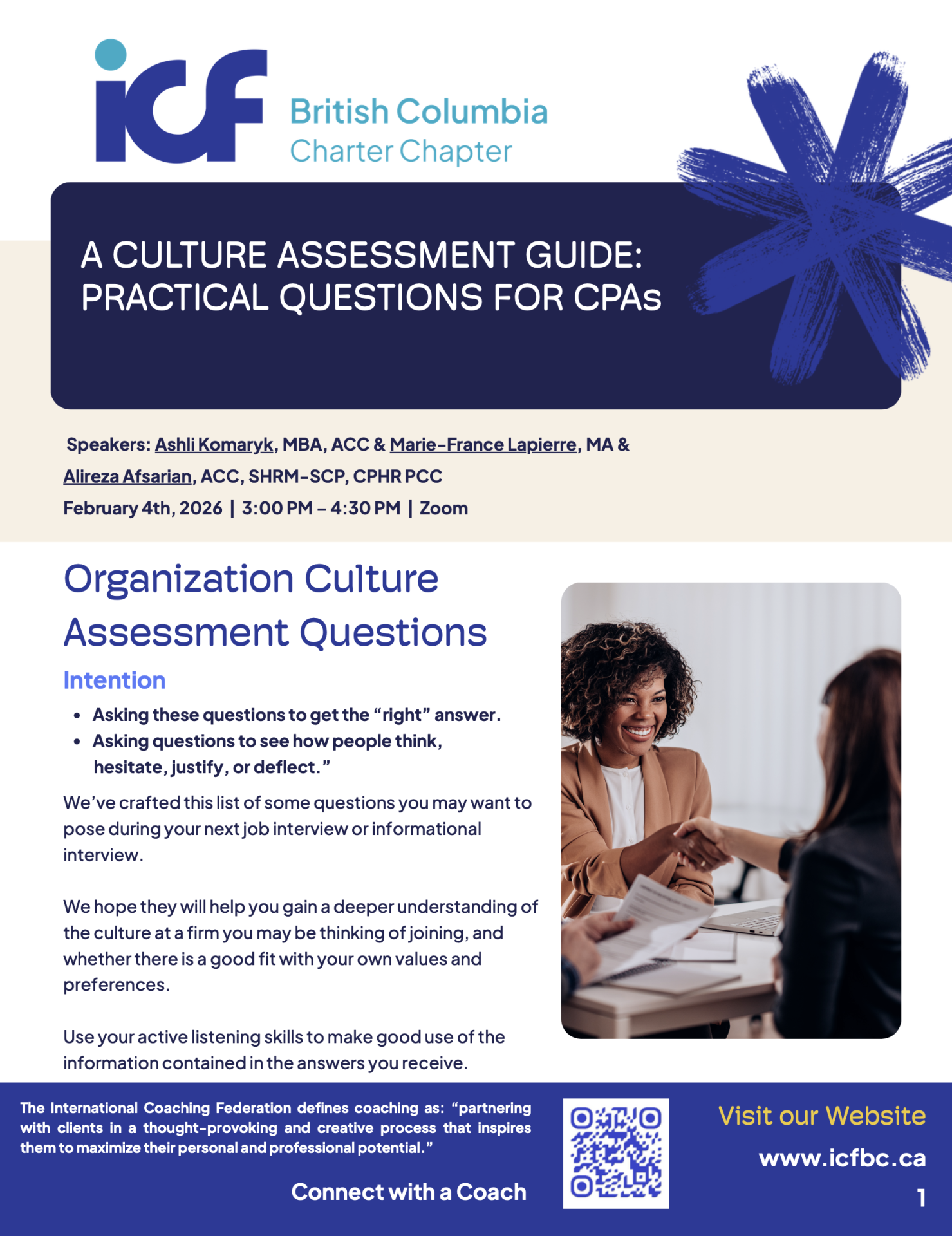
Special thanks to Ashli Komaryk, MBA, ACC, Marie-France Lapierre, MA, PCC, and Alireza Afsarian, ACC, CPHR for all the efforts in coordinating our collective contributions to this event and creating a new coaching resource for our members. They presented "Beyond the Resume: The Importance of Cultural Fit" - offering a new interview toolkit for the interview process.
Our event team created a valuable new resource for members: "Beyond the Resume: The Importance of Cultural Fit"- an interview toolkit to support coaches and their clients through the interview process.
Resources:
Watch: Beyond the Resume: The Importance of Cultural Fit
Download the Interview Toolkit
Thank you for to all the volunteers for giving your time, expertise, and compassion!
With gratitude, respect and appreciation,
Robyn Ward, PCC
President
ICF British Columbia
Coach Spotlight
Michelle DeGroot, ACC
We're starting a Newsletter Segment that Highlights interviews with Coaches in our community!
-
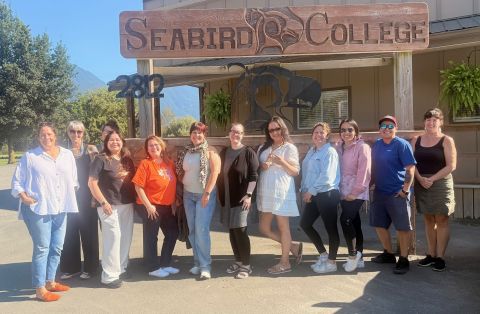
How did your journey into coaching begin, and what inspired you to create an Indigenous Coaching Program?
Coaching was not something I was aware of in the early part of my career. It was not until a short introduction to coaching was offered to myself and colleagues at the First Nation Health Authority that this resource became a tool for me to grow and learn about myself and the systems I worked within. Being coached, it did take some time to get comfortable focusing on myself, thought patterns, feelings, digging deep into the stories I told myself about how things worked in my world. Once I did though, I could start to experience the difference in how I approached situations. It was also a useful tool for me to facilitate discussion with my colleagues, especially those I supervised. These were not full-fledged coaching sessions but utilizing my listening and curiosity skills allowed for my colleagues to work through and find their answers during our one on ones and in meetings.
It was during Covid that I started talking with the coach who initially offered the short coaching skills program I initially participated in. I realized that coaching was something that I could expand on and create a business from. It was such a useful resource for me and my career that maybe others would also benefit. There were not many First Nation coaches out there, or not that I was aware of. I took a coaching certificate program during the later part of 2020. My leader at worker was supportive of me utilizing this new skill to support the organization. It raised interest in my colleagues about this tool. I was utilizing my colleagues to get my pro bono hours, and it was during this time I began discussing an Indigenous specific coach training program with my original coach (the OG) as those I was coaching were showing interest. The OG was also chatting with other Indigenous professionals about their interest in a Indigenous led, created and delivered coach training program.
There were a group of us that were part of the inception of the ICTP - Indigenous professionals and our coaching allies. It started out as a collective effort and continues today to be a collective effort.
-
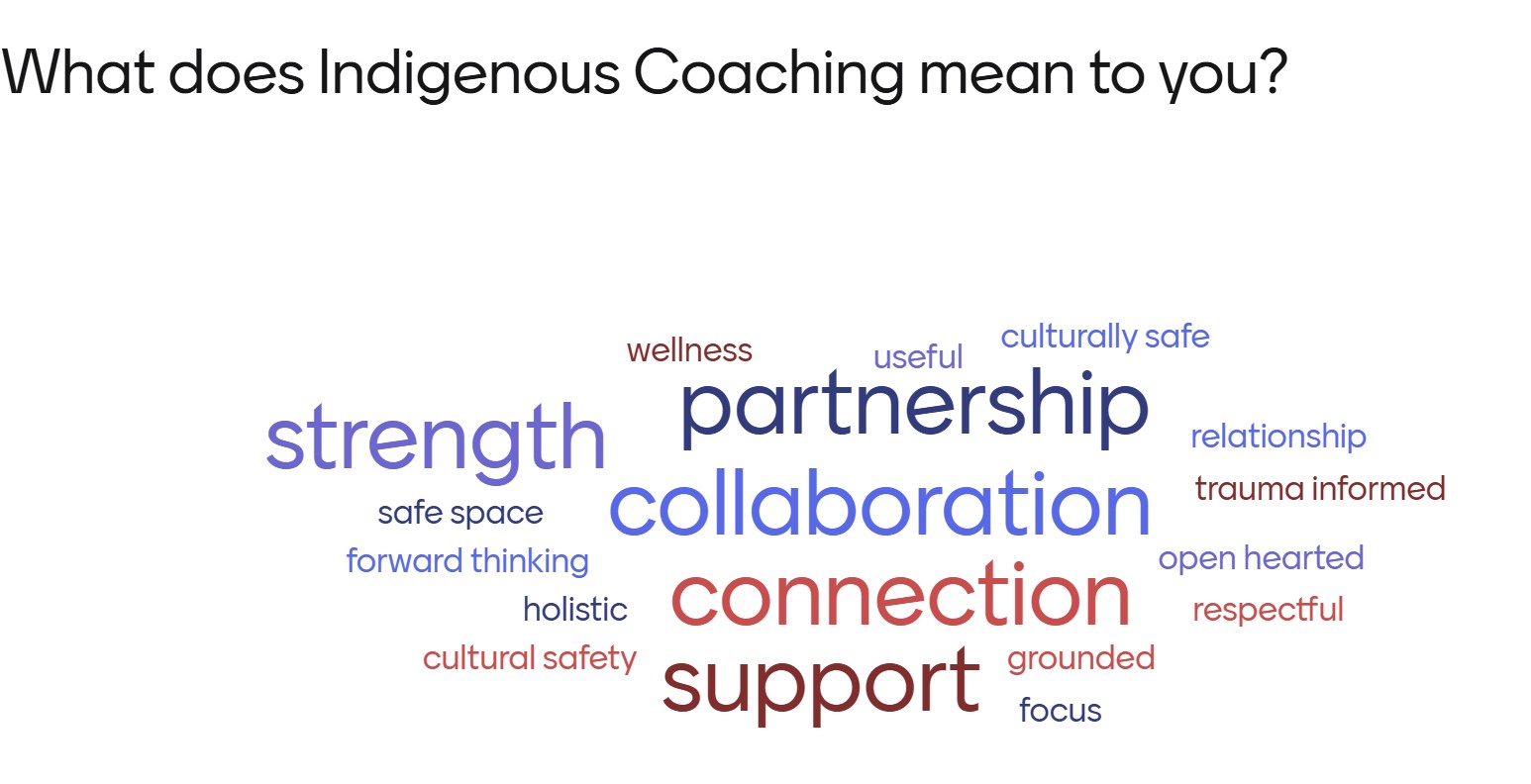
What impact have you seen your work have on Indigenous communities, and what does this mean to you personally?
What I observe now is that coaching has more acknowledgement as a resource for our communities and professionals. It is not always what people think coaching is but once explained, the clarity that it is an add on to mentoring, counselling, consulting is a big aha moment for some. The Indigenous Coach Training Program (ICTP) has just completed the 5th cohort. Since the first cohort in 2021, there have been almost 50 Indigenous professionals who completed the program. Consistent feedback received on the program is how life changing it has been for them. The participants get to be coached, and be the coach, and this has opened up various parts of their life, for the good. The coaching focus of acknowledging what is holding you back and making a plan, yourself, to work your way forward has been instrumental for some participant’s journey.
Personally, it has shown me how I put up barriers for myself, old patterns that I need to address for forward movement. The forward movement included being a professional coach and one of the facilitators for the ICTP. By moving in this direction, I now share my experiences with other Indigenous people who are interested in the program, are part of a cohort or have completed the program. It is so exciting to see others fulfillment during and especially after the program!
-
What challenges have you encountered in your efforts to advance Indigenous Coaching, and how have you navigated them?
It is not easy for Indigenous people to fund themselves for further education or to find time to add more work to already busy lives but all that have chosen to complete a coaching program whether it is ICTP or another program, are making a determined effort as they see the benefit to our people and for themselves.
The certifying bodies, such as ICF, are complex in structure and processes. Understanding how to navigate certification, resources, being part of the larger coaching community can be difficult, overwhelming and sometimes scary.
It has been important for Indigenous coaches to have a space of their own which some Indigenous coaching innovators have created. As Indigenous coaches, we will always find ways of incorporating who we are and our ways of being into everything we do. The ICTP has this as a grounding mechanism for the curriculum of the program and for the interpretation of the coaching competencies. It is always important to remember ‘who we are is how we coach’ so we embody our teachings we have in our practice.
-
How can ICF members and the broader coaching community support efforts to increase accessibility and representation of Indigenous Coaches?
For me it would entail a broader understanding of what allyship means to you and how that would translate into a commitment of reconciliation. It may look different for each ICF member and those of the broader coaching community. We are all responsible for ourselves which includes our biases. Reflective practice is important along with showing up with an open heart and mind. If there is opportunity to walk alongside an Indigenous person in their journey, whether you are their coach, employer or friend, then do so. I am sure your support would mean a lot.
Coach Spotlight
Steven Moyes, PCC

1. What inspired you to begin your journey in coaching?
Before I ever called myself a coach, I spent years in corporate communications. I worked closely with senior leaders, advising them on communicating with greater clarity. The part of my job I found most meaningful was sitting down one-on-one with leaders and asking questions that helped them clarify what mattered, and what they wanted to say.
Over time, I realized that those conversations were less about crafting messages and more about supporting leaders in thinking more deeply about their priorities and their impact. Coaching gave me a way to focus fully on that deeper work. Today, I draw on my communications background as I help clients strengthen their leadership presence, refine how they communicate, and lead with greater intention.
2. What is the work in Grenada like? How is coaching a powerful tool for those leaders?
In Grenada, I support leaders at an NGO that serves individuals recovering from drug addiction. The work includes coaching leaders individually, as well as facilitating workshops designed to build leadership and communication skills.
These leaders are operating in emotionally complex environments such as the country’s prison and residential treatment centres, and they carry a deep sense of responsibility for the people they serve. This coaching work is not short-term or transactional. It’s a long-term commitment grounded in trust, cultural respect, and sustainable development. Over time, we’ve seen coaching help leaders build confidence, strengthen decision-making, and lead in ways that are both compassionate and effective.
3. What does coaching for empowerment mean to you personally?
Coaching for empowerment means helping leaders recognize and trust their own capability, wisdom, and agency rather than relying on others for answers. I approach coaching as a collaborative partnership grounded in intercultural respect, curiosity, and trust. It’s important to honour local context and lived experience. My role is to support leaders to lead authentically and effectively, drawing on their own strengths.
4. How has coaching influenced your life and work?
I’ve become a much better listener! Before I trained as a coach, I was quick to jump in, finish sentences, or offer solutions. Through the Executive Coaching program at Royal Roads University, I learned the discipline of listening carefully and asking purposeful questions.
My conversations today are quieter, more intentional, and far more impactful. In my 15 years as a coach, I’ve seen again and again how transformative it can be when people are given space to think and arrive at their own insights.
Coaching has also sharpened my commitment to contributing beyond traditional corporate work. I aim to dedicate about ten percent of my practice to pro bono coaching to support organizations that are doing important work but cannot afford leadership coaching. This has led me to partner with leaders in developing countries. Most recently, I travelled to Cambodia to train NGO leaders in coaching skills they can use with their teams. I was deeply inspired by their resilience, creativity, and ability to lead effectively despite limited financial resources.
5. What do you hope to see as our profession grows and develops?
As the coaching profession grows, I hope we don’t lose our backbone. Strong ethics, rigorous training, and clear professional standards protect both clients and the integrity of the profession. I also hope we continue to deepen our commitment to reflective practices and cultural humility. As coaches, we must be skilled at listening across difference, and honouring the client’s context. When we do that well, coaching can become genuinely transformative.
February DEIB Reflection
DEIB in Coaching: Who Is Centered in the Room?
February invites us, in Canada, to pause and observe. Black History Month calls us to honour Black excellence, resilience, and leadership. Indigenous Languages Month on February 21 reminds us that language carries worldview, memory, and relationship. Pink Shirt Day later in the month asks us to notice how exclusion and bullying still show up, often subtly, in everyday systems.
Together, these moments offer more than commemoration. They invite a deeper inquiry into how we show up as coaches and facilitators.
In coaching and facilitation, DEIB is not only about what we know. It is about what we notice.
One unique and often overlooked aspect of DEIB in coaching is the question of who is being centered in the room, even when no one names it explicitly. This includes whose ways of speaking feel most familiar, whose pacing sets the rhythm, whose emotional expression feels acceptable, and whose silence is interpreted as engagement versus resistance.
As coaches, we are trained to listen deeply. DEIB invites us to expand that listening beyond content and into context. Not just what is said, but how meaning is shaped by culture, history, power, and lived experience.
A few reflective questions for our community to consider this month:
-
When working with a client or group, whose norms am I unconsciously reinforcing?
-
How do I interpret silence, hesitation, or indirect communication, and what assumptions am I making?
-
Whose emotional expression feels comfortable to me, and whose stretches my capacity to stay present?
-
How does my own cultural conditioning influence what I label as clarity, confidence, or leadership?
In facilitation, this awareness becomes even more critical. Group dynamics often mirror broader societal patterns. Voices with social privilege may fill space more easily, while others may self-edit, wait for permission, or disengage altogether. DEIB-informed facilitation does not force equity through airtime alone. It pays attention to structure, invitation, pacing, and psychological safety, and it makes room for multiple ways of knowing and contributing.
This month, we invite you to reflect on one simple but powerful practice: notice who the system is built for, even in a coaching conversation. Notice who adapts, who leads, and who carries the emotional labour of fitting in.
DEIB work in coaching is not about having the perfect language. It is about staying awake, staying curious, and being willing to gently shift the centre when needed.

Linda Schmidt
Director of DEIB
ICF British Columbia
Important Dates in February 2026
February – Black History Month
February – American Heart Month
February – Ethnic Equality Month
February 1–7 – UN: World Interfaith Harmony Week
February 1 – National Freedom Day
February 4 – Rosa Parks Day
February 4 – World Cancer Day
February 7 – National Black HIV/AIDS Awareness Day
February 8 – International Epilepsy Day
February 10 – Safer Internet Day
February 11 – International Day of Women & Girls in Science
February 14 – Valentine's Day
February 15 – Nirvana Day (Buddhist)
February 15 – International Childhood Cancer Day
February 15 – Maha Shivaratri (Hindu)
February 16 – Family Day (Canada)
February 17 – Chinese New Year (Lunar New Year) - Year of the Horse
February 17 – Mardi Gras
February 17 – Ramadan begins in the evening (Islam) - Expected to begin
February 18 – Ash Wednesday
February 20 – World Day of Social Justice
Global Updates
Important Dates for ICF Global 2026
International Coaching Week | May 11-17, 2026
Our annual global celebration of coaching! This is a perfect time to showcase the impact of professional coaching, connect with the worldwide coaching community, and participate in special events. Watch for ICF BC activities during this week, we'll have more details to share soon!
ICF Converge Summit Paris | May 17-19, 2026
Experience coaching innovation and community in the heart of Paris! This summit brings together coaches from around the world for learning, networking, and inspiration as International Coaching Week comes to a close.
ICF Converge | Washington DC | October 28-30, 2026
ICF's Annual conference returns to Washington DC! Join thousands of coaches for world-class education, cutting-edge research, networking opportunities, and the chance to earn CCE units while connecting with the global coaching community.